Blackjack Online: How to Play, Understand the Rules, and Choose the Best Offer
Last updated: June 2026

Last updated: June 2026
Disclaimer: This article is for informational and educational purposes only. Gambling involves the risk of financial loss and may be restricted or illegal in your jurisdiction. The house always retains a mathematical edge. Never wager more than you can afford to lose, and if you or someone you know shows signs of problem gambling, contact a helpline such as the National Council on Problem Gambling (1-800-522-4700) or visit BeGambleAware.org. Play responsibly.
disclaimer
Blackjack is a card game. The concept is almost disarmingly simple: get closer to 21 than the dealer without going over. That's it — or at least, that's the surface. Underneath sits a layer of decision-making that keeps millions of players coming back, hand after hand, year after year.
Also called Twenty-One, blackjack is one of the most widely played casino card games worldwide. If your hand exceeds 21, you "bust" and lose immediately, no matter what the dealer holds. The elegance lies in how much control you actually have over the outcome — more than almost any other casino game.
"58 % of Texans who play card games online named blackjack as their primary game, citing fast pace and simple decisions." — Tufts University Digital Planet, Texas Gaming Institute Survey (2024). https://digitalplanet.tufts.edu/26092-2/
note
So why does this particular blackjack game attract so much attention online? A few reasons stand out.
Every round of blackjack comes down to one question: is your hand total closer to 21 than the dealer's? You don't need to hit 21 exactly. You just need to beat the dealer — or wait for the dealer to bust. A hand of 18 wins against a dealer's 17. A hand of 14 wins if the dealer draws to 25 and busts.
The cards are dealt, you make decisions, and the round resolves in seconds. Win, lose, or push (a tie where your bet is returned). That speed, combined with genuine strategic depth, is what separates blackjack from pure-chance games like slots.
Under standard rules and correct basic strategy, the casino's mathematical advantage drops to approximately 0.5 % — far lower than most slot machines. Mathematician Edward O. Thorp first popularized this figure in Beat the Dealer (1962), and repeated analysis has confirmed it since.
Online blackjack removes geographic barriers, dress codes, and high minimum bets. Many platforms offer tables starting at $0.10–$1.00 per hand. RNG (random-number-generator) blackjack tables can deal 100–200 hands per hour, compared to roughly 50–70 at a physical table. That makes online play ideal for quick sessions — or for drilling strategy at your own pace.
Live blackjack adds another dimension. A real dealer, a physical shoe of cards, HD video streaming — it feels closer to a casino floor, but you're playing from your phone or laptop. The social element matters too: you can chat with the dealer and other players.
However, it's important to understand the other side. Faster games can also mean faster losses when bankroll discipline slips.
"Online casino games — slots, online blackjack, and roulette — are more strongly associated with gambling harm indicators than slower products." — Analysis of gambling account records in Norway (accepted 2024-03-25). https://pmc.ncbi.nlm.nih.gov/articles/PMC11934949/
note
The bottom line: blackjack offers one of the best mathematical propositions in any casino, but the casino still holds an edge. No strategy eliminates that edge entirely. Approach every session with a fixed budget and a clear stopping point.
Glossary of Basic Blackjack Terms
Whether you play blackjack online through an RNG game on your phone or sit at a felt-covered live table, every round follows the same sequence. Seven steps, no exceptions.
Step 1: Place your bet. Before any cards appear, you select a chip value and place your wager in the betting circle. Online tables display minimum and maximum limits — beginners should start at or near the minimum.
Step 2: Receive your cards. The dealer gives two cards face up to each player and takes two cards for themselves — one face up (the "upcard") and one face down (the "hole card"). In the European variant, the dealer receives only one face-up card at this stage and draws the second after players finish.
Step 3: Evaluate your hand and the dealer's upcard. Look at your total and compare it to the dealer's visible card. That upcard is your primary clue. A dealer showing 5 or 6 is in a weak position — high bust probability. A dealer showing 10 or ace? That's strong.
Step 4: Decide — hit, stand, double down, or split. This is where strategy enters the picture. Based on your hand total and the dealer's upcard:
You may hit as many times as you like. Each additional card is added to your total. If you exceed 21 at any point, you bust and lose — the round is over for you. No second chances.
Step 5: Dealer reveals the hole card. Once all players have finished their decisions, the dealer flips their face-down card.
Step 6: Dealer draws by fixed rules. Unlike you, the dealer has no choices. The dealer must:
Some tables use the rule "Dealer hits on soft 17," meaning the dealer draws another card if their 17 includes an ace counted as 11. This small rule change increases the house edge by about 0.20 percentage points compared to the "stand on all 17s" rule.
Step 7: Settlement and payout. Hands are compared. Winners are paid, losers forfeit their bets, and pushes return the wager.
Blackjack round flow: Bet → Cards dealt → Player decision (hit / stand / double / split) → Dealer turn → Result (win / lose / push)
| Outcome | Payout |
|---|---|
| Regular win (your hand beats the dealer's without busting) | 1:1 (even money) |
| Natural blackjack (ace + 10-value card on the first two cards) | 3:2 (you bet $10, you receive $15 in profit) |
| Insurance (side bet — dealer has blackjack) | 2:1 on the insurance wager |
| Push (tie) | Bet returned |
A quick correction worth noting: some sources incorrectly state that a regular win pays 2:1. That is wrong. A standard win over the dealer pays 1:1. Only a natural blackjack pays the enhanced rate of 3:2 — or 6:5 at some tables. Avoid 6:5 tables when possible, as the reduced payout nearly doubles the house edge.
Before you sit down at any table — virtual or physical — you need to know exactly what each card is worth and how the dealer's side of the game works.
| Card | Value |
|---|---|
| 2 through 10 | Face value (a 7 is worth 7) |
| Jack (J), Queen (Q), King (K) | 10 each |
| Ace (A) | 1 or 11 (whichever benefits the hand) |
An ace counted as 11 creates a soft hand — for example, Ace + 6 = soft 17. You can still take another card without busting, because if the next card pushes you over 21, the ace reverts to 1. A hand without an ace, or where the ace must count as 1, is called a hard hand (10 + 7 = hard 17).
A natural blackjack — an ace plus any 10-value card dealt as your first two cards — is the strongest possible hand. It beats everything except another natural blackjack, which results in a push.
Going over 21 means you bust. Instant loss. It doesn't matter if the dealer would have busted too — your bust comes first, and the house collects your bet.
The dealer follows rigid, predetermined rules. No creativity, no judgment calls. At most tables:
The "dealer hits on soft 17" variation is common at many online blackjack tables. It slightly favours the house. Before you play blackjack at any table, check the rules printed on the felt (or displayed in the game info panel online). These details — number of decks, soft 17 rule, surrender availability — directly affect the house edge.
One thing beginners sometimes miss: the dealer doesn't make strategic decisions. The dealer's play is automatic. Your decisions are the only variable you control — which is precisely why learning basic strategy matters so much.
Modern iGaming platforms typically offer two formats: RNG (software-dealt) blackjack and live-dealer blackjack. Both follow the same rules, but the experience differs in ways that matter.
"Live-dealer games frequently feature blackjack as a key product, providing interaction with a real dealer via real-time video streaming." — The Future of Live Dealer Games in Casinos, University of Barcelona (2024–2025). https://www.ub.edu/master-bioetica-y-derecho/the-future-of-live-dealer-games-in-casinos-15/
note
| Feature | RNG Blackjack | Live Dealer Blackjack |
|---|---|---|
| Dealer | Software algorithm | Human dealer on camera |
| Speed | ~100–200 hands/hour | ~50–70 hands/hour |
| Interface | Animated graphics, instant dealing | HD video stream, real table and cards |
| Social element | Minimal | Chat with dealer and other players |
| Realism | Abstract | High — physical cards, OCR capture |
| Bet limits | Often very low minimums ($0.10+) | Typically higher minimums ($1–$25+) |
| Card reading | RNG generates outcomes internally | Optical Character Recognition reads physical cards in real time |
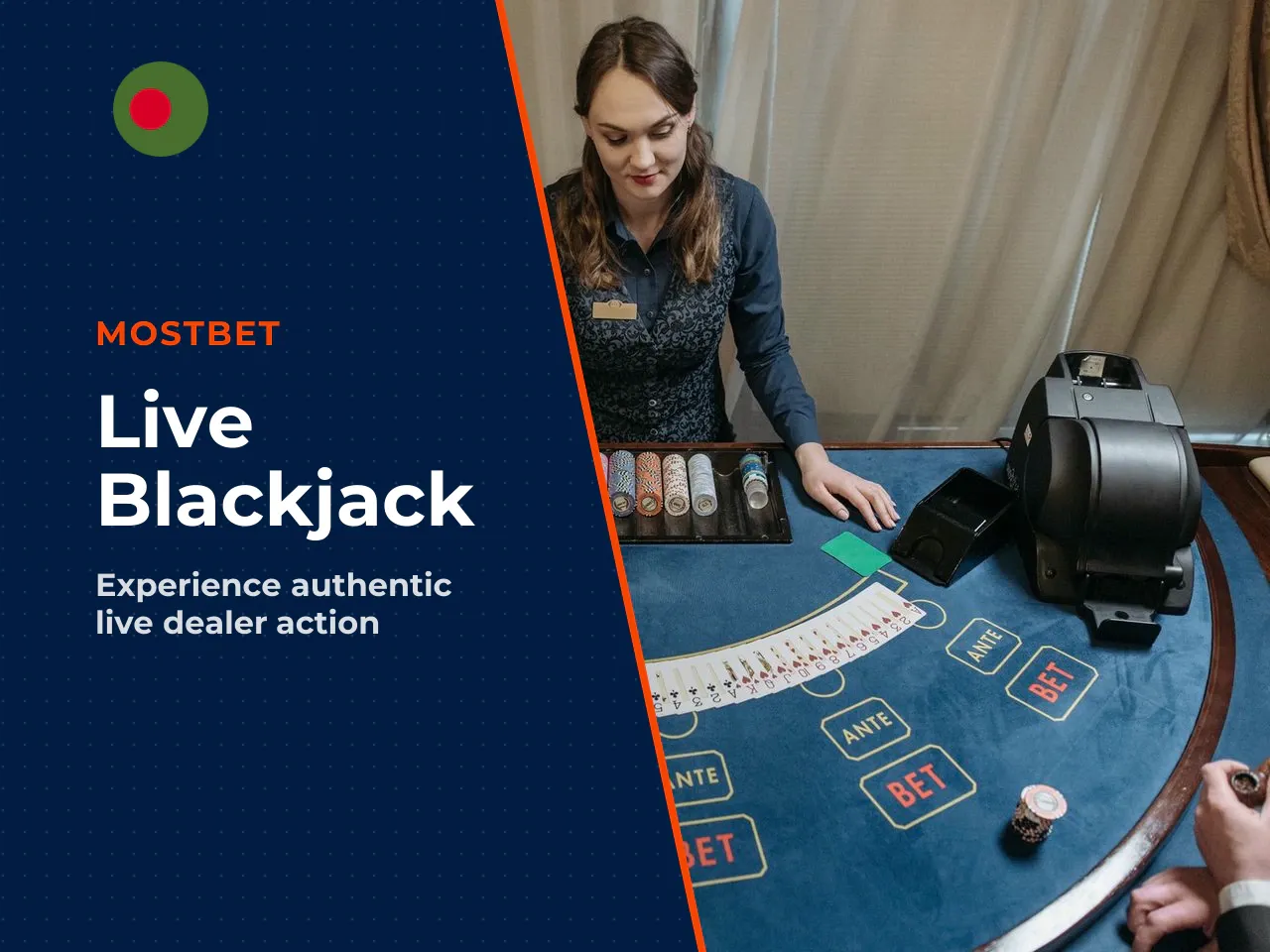
Choose live blackjack if you value the social atmosphere, the visual transparency of a physical shoe, and a casino-floor feeling from home. There's something about watching a real dealer shuffle and deal that RNG graphics simply can't replicate. The pace is slower, which — honestly — can be a good thing. It gives you time to think, and it naturally limits how many hands (and how much money) you cycle through per hour.
Live blackjack also appeals to players who want reassurance about fairness. Seeing physical cards dealt in real time feels more trustworthy to many people, even though licensed RNG games are independently audited for fairness.
Choose RNG blackjack if you want speed, low stakes, and solo practice. It's the ideal format for drilling basic strategy at your own pace — no waiting for other players, no pressure from a dealer's timer. Many blackjack games in RNG format let you pause mid-hand, which is useful when you're still learning.
RNG tables also tend to have lower minimum bets. If you're playing blackjack online with a small bankroll, starting at $0.10 or $0.50 per hand keeps your sessions longer and your risk lower.
"Different gambling formats are associated with different harm levels — fast online casino games show elevated conditional problem-gambling indicators." — Gambling Products, Gambling Problems and Gambling Involvement (2025). https://www.sciencedirect.com/science/article/pii/S030646032500190X
note
Whichever format you choose, the underlying math and rules remain the same. Your basic strategy chart works identically in both environments.
Basic strategy is a mathematically derived set of decisions for every possible combination of your hand and the dealer's upcard. Edward O. Thorp first systematized it in Beat the Dealer (1962), using probability calculations and early computer simulations. Applying it correctly reduces the house edge from roughly 2 % (for an average uninformed player) down to about 0.5 % — a reduction of approximately 75 %.
"Monte-Carlo reinforcement-learning methods converged to an optimal policy that maximizes expected return in blackjack." — Reinforcement Learning Strategies Using Monte-Carlo to Solve the Blackjack Problem (2023). https://www.academia.edu/112760266/Reinforcement_learning_strategies_using_Monte_Carlo_to_solve_the_blackjack_problem
note
Modern computation confirms what Thorp demonstrated over sixty years ago: optimal play exists, and it meaningfully improves your results. But — and this is crucial — even the optimal policy does not overcome the house edge under standard payout rules. The casino retains a positive advantage.
Here are five rules worth memorising before you play blackjack online:
The dealer's upcard is your single most important piece of information:
| Your Hand | Dealer 2–6 | Dealer 7–A |
|---|---|---|
| Hard 8 or less | Hit | Hit |
| Hard 9 | Double (vs 3–6); else Hit | Hit |
| Hard 10 | Double (vs 2–9); Hit vs 10/A | Hit |
| Hard 11 | Double | Double (vs 2–10); Hit vs A |
| Hard 12 | Stand (vs 4–6); Hit vs 2–3 | Hit |
| Hard 13–16 | Stand | Hit |
| Hard 17+ | Stand | Stand |
| Soft 13–17 | Hit (double vs 5–6 where allowed) | Hit |
| Soft 18 | Stand (double vs 3–6 where allowed) | Hit vs 9/10/A; Stand vs 7–8 |
| Soft 19–20 | Stand | Stand |
| Pair of A/8 | Split | Split |
| Pair of 10 | Stand | Stand |
| Pair of 5 | Double (as hard 10) | Hit or Double |
| Pair of 4 | Hit | Hit |
| Pair of 2/3/6/7 | Split (vs 2–7) | Hit |
| Pair of 9 | Split (vs 2–6, 8–9); Stand vs 7 | Split vs 8–9; Stand vs 7/10/A |
This chart summarises the most common situations. A full basic-strategy card covers every cell; many online casino platforms allow you to keep a reference card open while you play.
Card counting is probably the most romanticised blackjack technique. Made famous by Thorp's Beat the Dealer and later by the MIT Blackjack Team, the Hi-Lo system assigns simple tags to every card:
In theory, the system shifts the edge toward the player. In practice, online casinos have rendered it nearly useless:
"A real-time pipeline for accurate card counting via video analysis was implemented, yet frequent reshuffles make the method practically unprofitable." — Live Blackjack Card Counting via Real-Time Video Analysis, Stanford CS231n (2025). https://cs231n.stanford.edu/2025/papers/text_file_840589501-CS231n_Final_Project.pdf
note
eCOGRA, an independent testing agency, confirms that online blackjack RNGs do not retain deck history between hands, meaning card counting provides no statistical advantage.
Common myths worth clearing up:
Many platforms offer a free-play or demo mode where you wager virtual chips. This is an excellent learning tool — genuinely useful. But there are critical differences to understand before you assume the experience translates directly.
Free play serves one primary purpose: drilling basic strategy through repetition without financial risk. Many professionals and newcomers alike use HTML5 blackjack simulators to memorise the strategy chart by playing hundreds of hands at zero cost.
It's also useful for getting comfortable with the interface. Where's the hit button? How does splitting work visually? How fast does the RNG deal? These small details matter when real money is on the line, and free mode lets you sort them out in advance.
What stays the same in free play:
| Aspect | Free Play | Real-Money Play |
|---|---|---|
| Financial risk | None | Real losses possible |
| Emotional pressure | Low | Higher — money on the line |
| Betting behaviour | Players tend to be more reckless | Stakes feel consequential |
| Bonuses/promotions | Not applicable | Welcome bonuses, cashback, match-play |
"Match-play and free-play promotions are designed to accustom customers to wagering and increase their future gambling activity." — How Casino Match Play Promotions Can Hook Gamblers, UNLV Gaming Research & Review Journal (2025). https://oasis.library.unlv.edu/cgi/viewcontent.cgi?article=1513&context=grrj
note
The jump from free play to real-money blackjack should be deliberate. Here is a 5-point readiness checklist:
"The top 20 % most active players accounted for 92 % of all bets and 90 % of net losses at an online casino over a year." — Pareto Distributions in Online Casino Gambling (2021). https://www.sciencedirect.com/science/article/abs/pii/S0306460321001532
note
"Free-play promotions may increase hold percentage as players tend to make riskier bets with promotional funds." — Mississippi Mobile-Online Sports Betting Task Force Report (2023). https://www.peer.ms.gov/sites/default/files/publications/MobileSportsBettingReport_FINAL.pdf
note
Takeaway: Use free mode to learn. When you move to real money, recognise that your psychology — not just the math — changes dramatically. Set limits before you start.
Bonus offers and casino promotions are governed by the operator's terms and conditions. Transitioning to real-money play carries financial risks.
note
Not all online casinos are created equal. Some are excellent. Some are, well, not. Here's how to tell the difference before you commit real money.
Casino bonuses sound appealing, but blackjack players face specific traps that slot players don't:
A genuinely valuable offer for casino blackjack players might include cashback on net losses, low wagering requirements with fair table-game contribution, or access to exclusive live blackjack tables with higher RTP rules (3:2 payout, dealer stands on soft 17).
"Online platforms include table games — blackjack and roulette — offered alongside sports betting products to increase customer engagement." — Rush Street Interactive, Form 10-K (2025). https://www.sec.gov/Archives/edgar/data/1793659/000179365926000009/rsi-20251231.htm
note
Here are the top safety criteria and quality signals to look for:
Safety first:
Quality signals:
Explore the offerings at Casino — live tables, classic variants, and current offers for new players are collected in one place. Learn more about iGaming and choose the format that suits you.
About the editorial team: This guide was prepared by a sports and iGaming editorial team specialising in rules explainers, format comparisons, and responsible gaming content. Our approach is compliance-first: facts before promotion, transparency before persuasion.
Online gambling laws vary dramatically by country and region. In some jurisdictions — including Bangladesh under the Public Gambling Act of 1867 — gambling (including online) is illegal or heavily restricted. Before playing for real money:
"10 % of men aged 18–30 display indicators of problem gambling behaviour — compared to 3 % of the general population; online betting is closely linked to these problems." — Fairleigh Dickinson University Poll (2024). https://www.fdu.edu/news/fdu-poll-finds-online-betting-leads-to-problems-for-young-men/
note
| Factor | Sports Betting | Casino Blackjack |
|---|---|---|
| Outcome determined by | Real-world sporting events | RNG or live shoe with fixed dealer rules |
| House edge | Varies by market (typically 4–10 %) | ~0.5 % with basic strategy |
| Skill component | Research, form analysis, market reading | Basic strategy, bankroll management |
| Speed of result | Hours to days (per event) | Seconds per hand |
| Regulatory treatment | Often regulated separately; increasingly legalised | Typically regulated as casino gaming; restricted in more jurisdictions |
Understanding this distinction matters if you're evaluating your risk profile. Sports-media platforms analyse real events; blackjack is a mathematical game against the house.
This information is general in nature and does not replace professional advice. If you notice signs of problem gambling, contact a helpline for support.
note
Both. Card dealing is random (luck), but your decisions — hit, stand, split, double — are strategic (skill). Using basic strategy can reduce the house edge to approximately 0.5 %, proving that skill meaningfully affects outcomes. That said, short-term variance is real. You can play perfectly and still lose five hands in a row. Over hundreds of hands, skill shows up in the numbers. Over ten hands? Luck dominates.
"A reinforcement-learning agent using Markov decision processes and Monte-Carlo methods approximated the optimal blackjack policy, outperforming random players." — Reinforcement Learning Strategies Using Monte-Carlo to Solve the Blackjack Problem (2023). https://www.academia.edu/112760266/Reinforcement_learning_strategies_using_Monte_Carlo_to_solve_the_blackjack_problem
note
Regulators classify blackjack as a game of chance with skill elements — distinct from pure-chance games like slots, but not a pure skill game either.
Beat the dealer by getting a hand total closer to 21 without exceeding it. You don't need to reach 21 — you simply need to beat the dealer's total or have the dealer bust.
You "bust" and automatically lose your bet, regardless of what the dealer's hand shows.
No, not effectively. RNG blackjack reshuffles after every hand, and live-dealer shoes use shallow penetration. Card counting is only viable in physical casinos with deep shoe deals.
At a standard table, a natural blackjack (ace + 10-value card) pays 3:2. Some tables pay 6:5 — avoid them, as the reduced payout nearly doubles the house edge.
No. Insurance is a side bet with a negative expected value for the player. The probability of the dealer holding a 10-value hole card (~30.8 %) does not justify the 2:1 payout, which requires ~33.3 % frequency to break even.
Yes. Many online platforms offer demo or free-play modes with virtual chips. Use them to practice basic strategy before risking real money.
At licensed, regulated casinos — no. Independent testing agencies (eCOGRA, iTech Labs, GLI) certify that RNGs produce fair, random outcomes. The UKGC mandates certified RNG use for all remote gambling software. Always play at a licensed platform.
"Different gambling formats are associated with different harm levels; online casino games show elevated risks." — Gambling Products, Gambling Problems and Gambling Involvement (2025). https://www.sciencedirect.com/science/article/pii/S030646032500190X
note
Memorise the basic-strategy chart (provided above), start with low stakes or free play, set a strict bankroll limit, and never chase losses. The house always has an edge — your goal is to minimise it and enjoy the game responsibly.
If you or someone you know is struggling with gambling, help is available:
Set deposit limits, take breaks, and remember: no strategy guarantees a profit. The casino always holds a mathematical edge. Play for entertainment, not as a source of income.